Our craft
How Kashmiri chain-stitch rugs are made
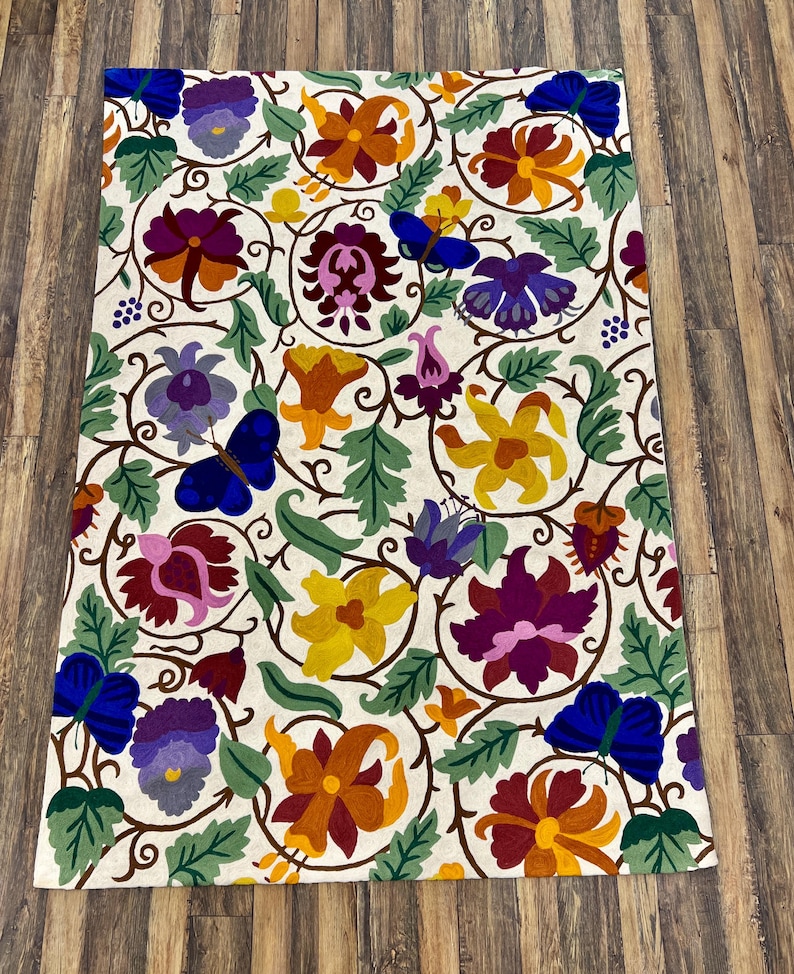
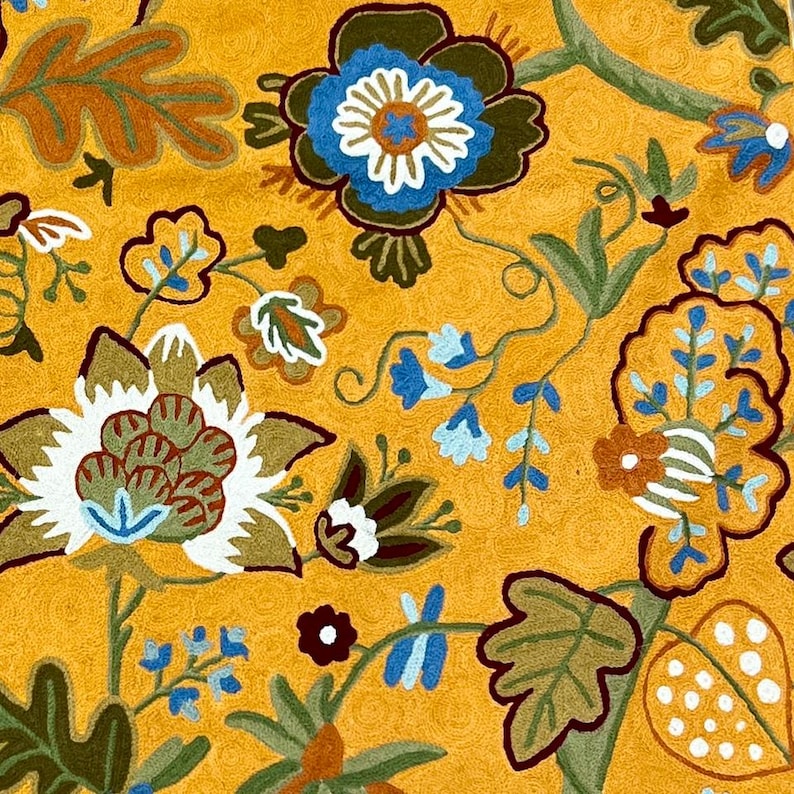
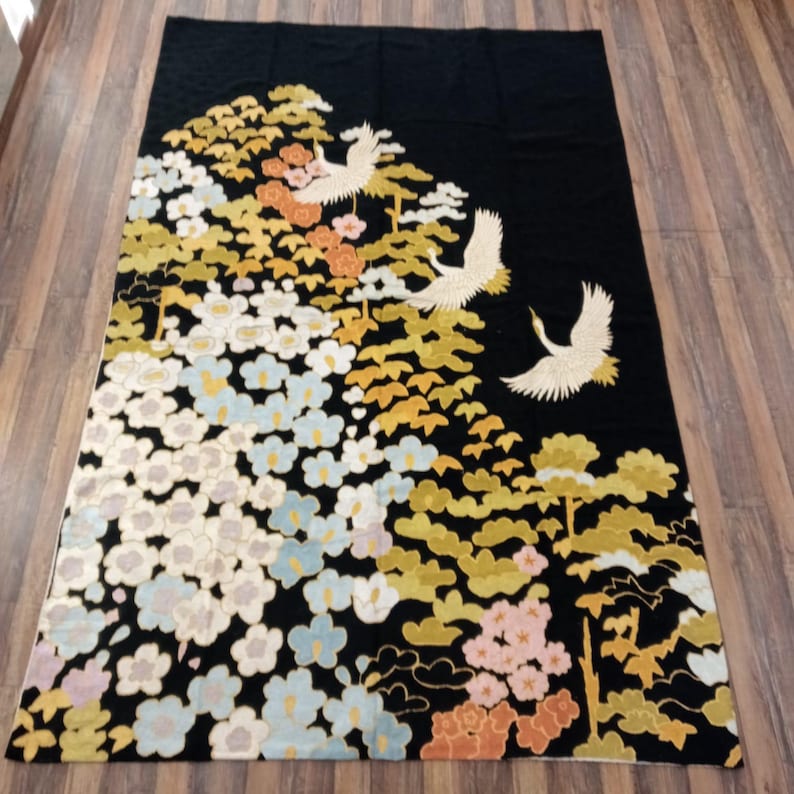
A chain-stitch rug is embroidered, not woven. A hooked needle draws loops of yarn through a base cloth, one chain at a time, until the whole design is filled in.
From start to finish
- 1
The base cloth
A tightly woven base cloth is stretched on a frame so the surface stays taut while it is stitched.
- 2
The design
The pattern is drawn or printed onto the cloth. Traditional motifs include Aubusson florals, tree of life, kilim geometry and modern art.
- 3
The hooked needle
The artisan works with a short hooked needle, often called an aari. Each pull creates a loop that locks into the one before, forming a continuous chain.
- 4
Filling in colour
Rows of chain stitch are laid side by side in wool, silk or crewel yarn. Tight rows give the rug its dense, textured surface and sharp colour detail.
- 5
Finishing
The rug is trimmed and pressed, then backed and edged so it lies flat and wears well.
- 6
Checked and shipped
Every piece is inspected for stitch evenness and colour before it is packed and sent.
Chain stitch compared
| Chain stitch | Hand-knotted | Hand-tufted | |
|---|---|---|---|
| How it is made | Embroidered loops on a base cloth | Individual knots tied on a loom | Yarn punched through a backing |
| Look and feel | Dense, textured, painterly detail | Dense pile, very durable | Plush, modern designs |
| Typical use | Living rooms, bedrooms, hallways, wall hangings | Heavy-traffic rooms | Bedrooms, lounges |
Caring for yours
- Vacuum gently without a beater bar, in the direction of the stitches.
- Blot spills straight away with a clean cloth. Do not rub or soak.
- Rotate the rug now and then so wear and sunlight are even.
- For deep cleaning, use a professional who handles wool and silk rugs.